The Ultimate Guide to UV Ink: Understanding CMYKWV, Circulation, and Material Compatibility



The Ultimate Guide to UV Ink: Maximizing Performance for Your Printing Business
At Mechblock.in, we believe that ink is the lifeblood of your production line. Much like the high-grade components we distribute for 3D printers and laser engravers, UV ink quality dictates the reliability of your machine and the professional finish of your products.
Whether you are using a desktop UV printer or an industrial setup, understanding CMYKWV, ink circulation, and material compatibility is essential to reducing maintenance costs and increasing output quality.
UV Ink vs. Conventional Ink: Why the Science Matters
Most traditional inks dry through evaporation or absorption. UV (Ultraviolet) ink is a different beast entirely. It cures instantly when exposed to specific wavelengths of light.
At the chemical level, UV ink is a sophisticated blend of monomers, oligomers, and photoinitiators (like BAPO). Modern industry standards are shifting toward TPO-free UV inks to comply with safety regulations—a move we strongly support for a safer workspace.
Key Physical Properties:
- Instant Curing: No drying time means faster turnaround for your customers.
- Surface Adhesion: Unlike water-based inks, UV ink sits on top of the material, allowing you to print on glass, metal, acrylic, and even ceramics.
- Durability: High resistance to scratches and environmental wear.
Decoding the CMYKWV System
While CMYK handles the color, the 'W' and 'V' channels are what turn a standard print into a premium product.
1. The Power of White Ink (W)
White ink acts as a "primer" layer. On dark phone cases or transparent acrylic trophies, white ink is printed first to ensure the colors on top remain vibrant and opaque. At Mechblock.in, we often see creators use layered white ink to build 3D embossed textures—a massive trend in the Indian corporate gifting market.
2. The Magic of Varnish (V)
Varnish (Clear ink) isn't just for shine. It can be used for:
Spot UV Effects: Making specific parts of a logo "pop" with a glossy finish.
Protective Coating: Increasing the lifespan of items handled daily.
Matte vs. Gloss: Controlling the final aesthetic of the product.
The "White Ink Dilemma": Why Circulation is Non-Negotiable
The most common cause of printhead failure is Titanium Dioxide—the heavy pigment used in white ink. It tends to settle at the bottom of tanks and clog precision nozzles.
If you are looking to scale your business, always opt for machines with a White Ink Circulation (WIC) system. This setup uses a stirring motor and pump to keep pigments suspended, ensuring your printer is ready to go every morning without tedious manual cleaning.
Pro Tip: For those exploring new hardware, check out our latest 3D and Laser hardware solutions designed for high-uptime environments.
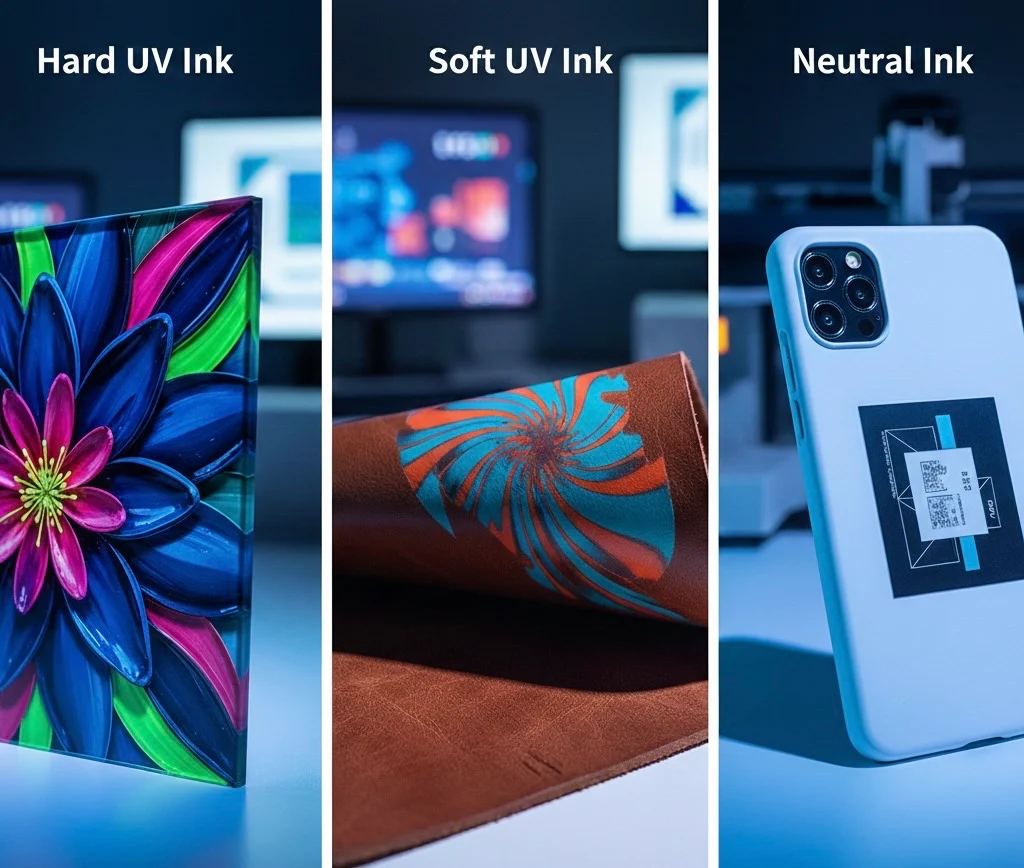
Hard, Soft, or Neutral? Choosing the Right Ink for Your Substrate
Using the wrong ink type leads to cracking or peeling. Refer to our compatibility chart below:
| Material | Recommended Ink | Property |
| Glass, Metal, Acrylic | Hard UV Ink | Scratch-resistant & high gloss. |
| Leather, TPU, Silicone | Soft (Flexible) Ink | Stretches without cracking. |
| MDF, Wood, KT Board | Neutral Ink | The "all-rounder" for mixed media. |
OEM vs. Generic Inks: Protecting Your Investment
While generic inks are cheaper upfront, OEM (Original Equipment Manufacturer) inks are chemically calibrated for your specific printhead. At Machinoid Pvt Ltd, we recommend sticking to approved inks to:
Maintain color consistency across batches.
Protect your machine’s warranty.
Ensure predictable curing times.
For businesses focused on high-volume corporate gifting and industrial marking, the reliability of OEM ink far outweighs the minor savings of third-party alternatives.
5 Pro-Maintenance Tips for UV Printers
To keep your Mechblock equipment running at peak performance, follow these golden rules:
Avoid Sunlight: Direct UV rays from windows can cure the ink inside your tubes.
Climate Control: Keep your workspace between 15°C - 35°C.
Check Shelf Life: Most UV inks expire within 12 months.
Agitate White Ink: Even with WIC, a gentle shake of the ink bottles once a week helps.
Daily Nozzle Checks: Prevention is always cheaper than a printhead replacement.
Conclusion
Understanding the nuance of UV ink is the difference between a struggling startup and a high-efficiency print studio. By matching the right ink to your material and maintaining your circulation systems, you ensure every print is a masterpiece.
Ready to upgrade your production capabilities?
Explore the full range of professional hardware and industrial supplies at Mechblock.in – Your Partners in Printing Excellence.
For more information and to connect with us you can check our website at Mechblock.in